Agreements for the life you're building

Four kinds of agreement, each shaped around real situations.

Find the one that fits where you are now, or talk it through with us and we'll help you choose.

Prenuptial agreements

Made before you marry. A prenuptial agreement records what each of you brings, how you'll treat what you build together, and how you'll support each other, so married life begins with a shared understanding instead of assumptions.

It fits when

  • One of you owns a home, a business or investments
  • There are children from a previous relationship
  • You earn very differently, or one of you plans to step back from work to raise a family
  • An inheritance or family gift is expected
  • One of you carries student loans or other debts
  • It's a second marriage and you want to provide for children from the first

What it can cover

Property and savings brought into the marriage, how future income and assets are held, debts, the family home, business interests and mutual support. Arrangements for children, such as custody and child support, are always decided separately, in their best interests.

A couple walking close together, holding hands.

Postnuptial agreements

Made during your marriage. Life rarely stands still, and a postnuptial agreement lets your plan catch up with it, together and on good terms.

It fits when

  • One of you is starting a business or buying into one
  • An inheritance has arrived or is on its way
  • A career change, a sabbatical or a move abroad
  • You're taking on, or paying off, significant debt
  • Your family is blending, with children from earlier relationships
  • One of you takes on new responsibilities, such as caring for a parent
  • You never made a prenup and would like the same clarity now

What it can cover

Everything a prenuptial agreement can, plus updates to an existing prenup when your circumstances have changed since you signed it.

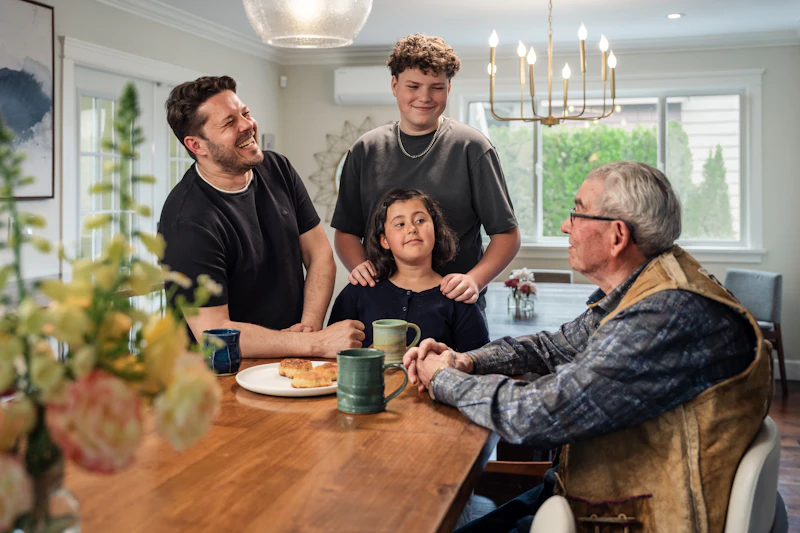
Three generations of a blended family talking around a kitchen table.

Cohabitation agreements

For partners who share a home without marrying. Unmarried couples often have fewer automatic protections than they assume. A cohabitation agreement puts your intentions in writing, so your home, money and responsibilities reflect what you've actually agreed.

It fits when

  • You're moving in together or buying a home together
  • One of you is contributing more to the deposit or mortgage
  • You share some finances but keep others separate
  • You're raising children, including each other's children
  • You've chosen not to marry, on principle or by preference
  • You might marry one day, but want clarity now

What it can cover

Who owns the home and in what shares, how bills and costs are divided, joint accounts, belongings and pets, and how each partner's contributions are recognized.

A couple carrying moving boxes and a plant into their new home.

Estate planning

An estate plan makes sure the people you love are looked after the way you intend, and that someone you trust can act for you if you can't. We build it around your family, whatever shape it takes, and align it with any relationship agreement you have.

It fits when

  • You've married, moved in together or welcomed a child
  • You're in a blended family and want to provide fairly for everyone
  • You're not married, and your partner wouldn't automatically inherit
  • You own a business or property
  • You want to choose who makes medical decisions for you
  • Your current will no longer reflects your life

What it can cover

Wills and trusts, guardianship wishes for children, powers of attorney, healthcare directives and beneficiary designations, all reviewed alongside any prenuptial, postnuptial or cohabitation agreement.

An older couple reviewing documents together on their sofa.

Book a consultation

A first conversation for the two of you, at our office or by video. We listen, explain your options and suggest a next step, with no obligation to go further.

(555) 000-0000
hello@tuschinski-law.example